
VEGETATION

Trees
More than a dozen species of trees are in the Kimberley Nature Park. Most of the park is covered with mixed conifer forests of interior Douglas fir, lodgepole pine and western larch. In the south, along Sunflower Hill, grasslands dotted with scattered aspen groves blend into open forests of ponderosa pine. On protected north-facing slopes, and in valley bottoms where water is abundant, patches of western red cedar can be found interspersed with Engelmann spruce, cottonwood and subalpine fir.
Forest fire has been an integral part of East Kootenay forests for millenia and has helped to shape the mix of species and age classes. Learn about the impact of fire, and about our fire-suppression efforts, on the Interface Fire/Ecosystem Restoration page.

Grasses
We have identified 30 species of grass in the nature park and suspect there are many more. Most are native, about a dozen are introduced, and a few, such as cheatgrass and quackgrass, are unwelcome, weedy pests.
Sun-loving grasses form much of the ground cover on the open, south-facing slopes of Sunflower Hill where the tufted bunchgrasses, in particular, attract Rocky Mountain elk.
Grasses grow in all ecosystems and can be found throughout the park. Look for lush carpets of slender pinegrass in forested areas, and tall reed canarygrass where it is wet.
Shrubs
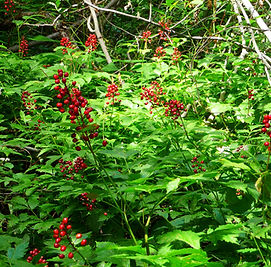
Beneath the forest canopy lies an extensive and diverse shrub layer. Taller shrubs such as saskatoon, red osier dogwood, Sitka alder, and Douglas maple rise above a lower layer of common juniper, red twinberry, soopolallie, birch leaf spirea, Oregon grape, and huckleberry, which in turn overshadow a ground-hugging layer of grouse berry, kinnikinik, false box, and twinflower. The mix of shrubs varies from place to place as the patterns of soil, moisture, and available sunlight change. The shrub layer provides important forage for herbivores, and habitat for birds.

Fungi
Fungi are neither plants nor animals. They are organisms in their own taxonomic fungi kingdom. They live mostly out of sight in the soil, in dead vegetation, and in living vegetation as a mycelium root mass. When temperature, moisture, soil chemistry, day length and other variables are right, the mycelium will produce fruiting bodies that we call mushrooms.
Mushrooms show a huge diversity of different shapes, sizes, colours, groupings, scents, and textures. As many common names indicate, all the colours of the rainbow are represented: blue stain, orange peel, scarlet cup, rosy larch, red belt, inky cap, and more. Some, such as Armillariella mellea, have phosphorescent mycelia embedded in wood that literally glows in the dark. Sizes range from tiny (including all the LBMs, or Little Brown Mushrooms) to humongous, such as the basketball-sized Calvatia booniana or western giant puffball. Scents can be sweet, spicy, or downright foul. Textures are smooth, slimy, warty, or any combination you can imagine.
Some mushrooms appear just after spring snowmelt, and some in the summer following rainstorms. In the East Kootenay, fall is an ideal time to go foraging for mushrooms. They are ubiquitous throughout the nature park, and discovering them can enliven any hike on any trail.
A recommended guidebook for a beginning fungophile is David Arora’s All That The Rain Promises And More. There are currently about 85 species of fungi on the park species list, with hundreds more still to be added.

Flowers
Below and among the shrubs, almost 200 species of wildflowers adorn the park. Some, such as the balsam root on Sunflower Hill and the glacier lilies above Boulder Trail, present spectacular displays, while others, such as calypso orchids or single delight, require a keen eye and a bit of searching.
Plants in the park begin to flower in late April and early May, with balsam root, spring beauty, glacier lily, and calypso orchid among the first to bloom. Later in the spring, heart-leaf arnica, bunchberry, twinflower, blue clematis, and sarsaparilla all produce their flowers. By early summer the late bloomers, such as paintbrush, bracted lousewort, and ceanothus join the display.
Since the park has a 625-metre elevation change from bottom to top, the first flowers are often out at lower elevations while those at the top are still under snow.
Lichens
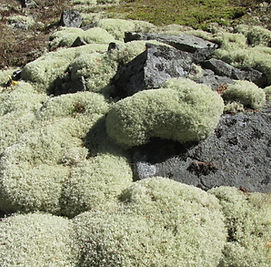
Lichens are not simple organisms, but rather a partnership between fungi and algae. Fungi provides the structure of the lichen, and algae harvests energy from the sun to provide nutrients for both partners.
There are over 150 species of lichens in the park, and much more work needs to be done to identify and catalogue them all.
Lichens are extremely diverse in their forms and habitats, and can be found in almost every corner of the park. They range from the drooping hair lichens on the branches of trees to leafy pelt lichens on road cutbanks, from the thin crusts coating the boulders and cliff faces to the tiny pixie cups on stumps and soils.
Lichens help in the formation of soils, provide shelter and food for a variety of invertebrate species, and can be a significant source of nitrogen for the forest ecosystem.